Résumé de l'article :Cet article dissipe les incertitudes pour répondre à la véritable question concernant la durée de vie d'une excavatrice sur chenilles. En utilisant laJinggong JG150Lcomme référence, nous décomposons la différence entre les « heures » et les « années », révélons les 4 facteurs clés qui déterminent la longévité de la machine et fournissons des intervalles d'entretien réalistes pour les principaux composants. Vous apprendrez également 5 habitudes éprouvées sur le terrain pour faire dépasser 15 000 heures de fonctionnement à votre excavatrice, afin de prendre une décision d'achat à six chiffres en toute confiance.
L'achat d'une excavatrice sur chenilles est une décision à six chiffres. Et si vous êtes comme la plupart des entrepreneurs, vous avez probablement recherché une variante de cette question sur Google : « Combien d'années cette excavatrice va-t-elle réellement me servir ? »
Question pertinente. Mais voici la vérité difficile à accepter : se baser sur les « années » revient à partir du mauvais point. Les vraies questions sont :Qu'est-ce qui détermine réellement la durée de vie d'une excavatrice ?Et comment m'assurer que la mienne atteindra le haut de cette fourchette ?
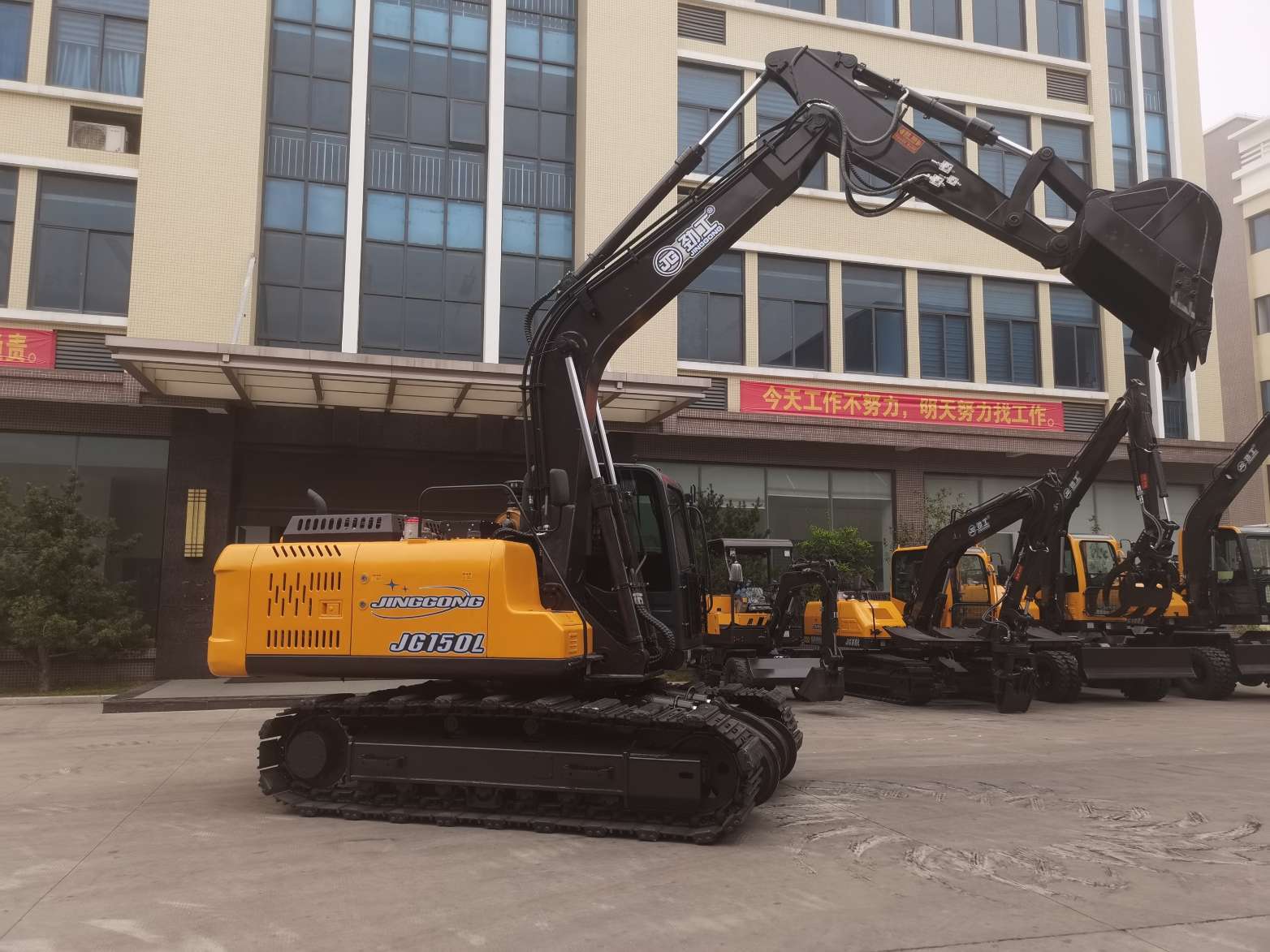
Dans cet article, nous utilisons laJinggong JG150L— une machine de travail robuste de la catégorie des excavatrices sur chenilles de 15 tonnes — comme référence concrète. Pourquoi ? Parce que ses caractéristiques nous donnent des chiffres précis sur lesquels travailler, et non de vagues moyennes du secteur.
Éliminons les détails superflus et allons directement à ce qui compte.
La réponse courte : à quoi s'attendre en heures et en années
Dans des conditions de travail normales — pensez aux travaux d'excavation standard, au chargement de camions et au creusement de tranchées — une excavatrice sur chenilles de 15 tonnes bien construite comme la JG150L offre généralement10 000 à 12 000 heuresde service productif avant de nécessiter une révision majeure (reconstruction du moteur, remplacement de la pompe hydraulique, ce niveau d'intervention).
Convertissons cela en années civiles : pour une machine fonctionnant 1 000 à 1 200 heures par an — ce qui correspond à la norme du secteur pour les entrepreneurs, les flottes de location et les équipes municipales — vous pouvez compter sur8 à 12 ansde service actif générant des revenus.
Conseil de pro pour les acheteurs et les vendeurs :Les « heures » sont le chiffre qui compte réellement, pas les « années ». Deux machines fabriquées la même année peuvent être dans des états totalement différents si l'une est restée inactive dans un parc tandis que l'autre a fonctionné trois équipes par jour. Demandez toujours le relevé du compteur horaire et le carnet d'entretien, et pas seulement la date de fabrication.
La durée de vie d'une excavatrice n'est pas un simple chiffre inscrit en usine. Elle résulte de l'accumulation de plusieurs facteurs. Voici comment ils se manifestent sur la JG150L :
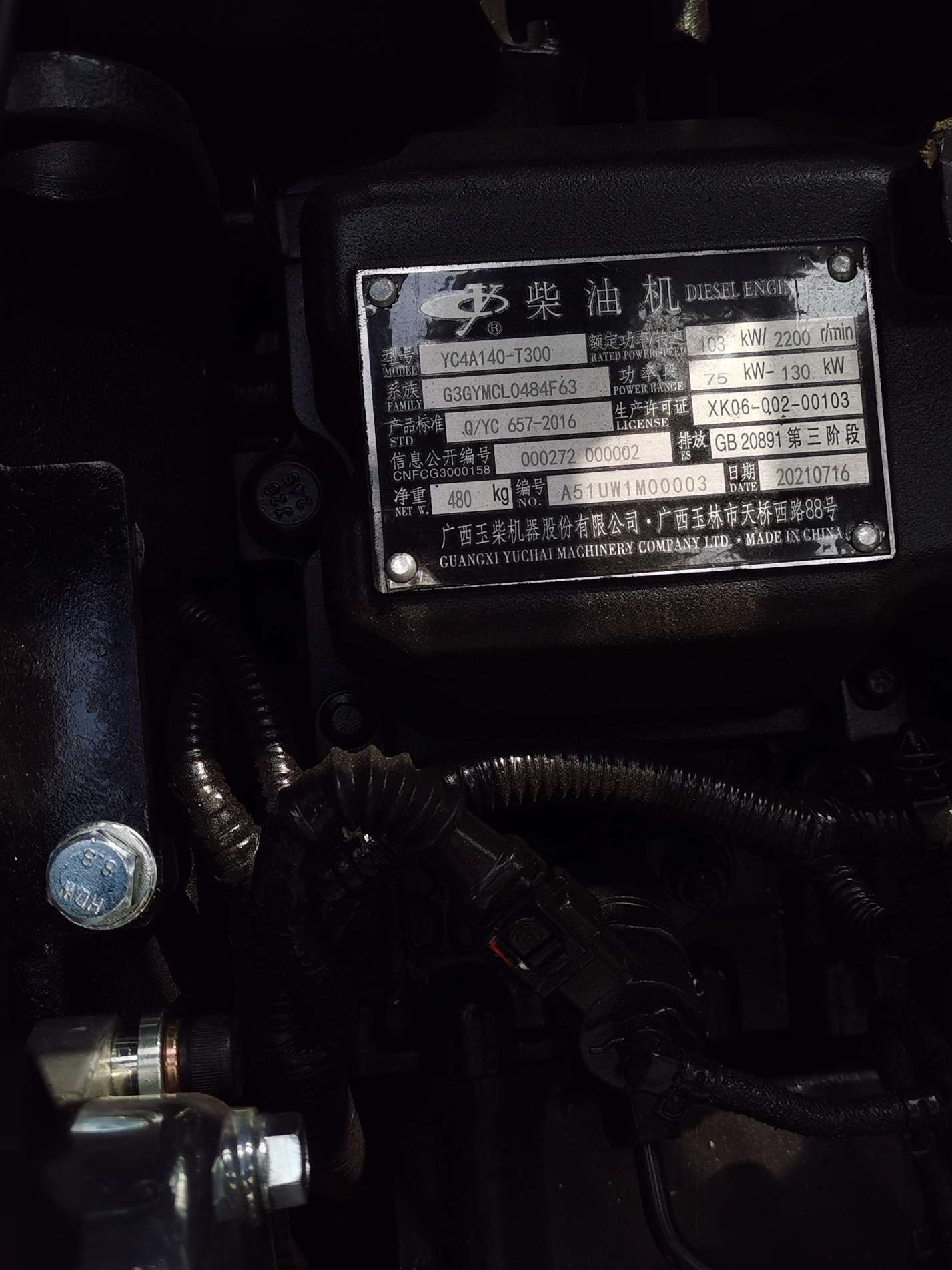
La JG150L fonctionne avec un moteur Yuchai d'une puissance nominale de 103 kW à 2 200 tr/min. Yuchai possède une longue expérience sur le marché chinois des équipements lourds précisément parce que ces moteurs sont conçus pour des cycles de fonctionnement continus, et non pour une utilisation intermittente. Comme le moteur est généralement le premier composant majeur nécessitant une intervention, cela compte beaucoup lorsque vous estimez la durée totale de service.
Le système hydraulique de la JG150L fonctionne à une pression de travail de 32 MPa avec un débit de 270 L/min, entraîné par une pompe à pistons à cylindrée variable de 2×63 ml/tr.
Une pression plus élevée signifie une force d'excavation supérieure — ce modèle fournit une force d'excavation maximale de 90 kN — mais elle exige également de meilleurs joints, une filtration plus fine et une gestion plus stricte de l'huile. Négliger les vidanges d'huile hydraulique est le moyen le plus rapide de réduire de plusieurs années la durée de vie de votre machine. Nous y revenons plus bas.
Les patins de chenilles, les galets et les barbotins subissent de fortes contraintes sur les terrains rocheux ou abrasifs. La JG150L est équipée de patins de chenilles de 500 mm et d'un écartement de chenilles de 1 960 mm — des dimensions conçues pour répartir la pression au sol et réduire l'usure sur les sols typiques des chantiers. Mais soyons réalistes : les composants du train de roulement sont des consommables. Prévoyez leur remplacement bien avant que votre moteur ou votre système hydraulique ne nécessite une intervention.
Une machine qui creuse un sol meuble à régime partiel toute la journée durera toujours plus longtemps qu'une machine travaillant à force d'excavation maximale (ce chiffre de 90 kN) dans des travaux de roche ou de démolition. La protection contre les surcharges de rotation à 25 MPa de la JG150L aide à prévenir les dommages lors des rotations en surcharge, mais aucun système de protection ne remplace une utilisation raisonnable.
Voici une présentation simple du moment où vous devez prévoir des interventions majeures sur chaque composant. Il ne s'agit pas de chiffres optimistes dans les meilleures conditions, mais de données issues des performances réelles sur le terrain des excavatrices sur chenilles de taille moyenne de cette catégorie de poids (13 500 kg de poids opérationnel pour la JG150L).
| Composant | Intervalle d'entretien typique avant une intervention majeure |
|---|---|
| Moteur (avec un entretien approprié) | 10 000 à 12 000 heures avant révision |
| Pompe hydraulique | 8 000–10 000 heures |
| Train de roulement (chenilles, galets, barbotins) | 4 000–6 000 heures |
| Vérins hydrauliques / joints d'étanchéité | 5 000–8 000 heures |
| Machine complète (durée de vie utile économique) | 10 000–15 000 heures avec un entretien excellent |
Vous voulez que votre JG150L dépasse 15 000 heures ? Voici ce que font les propriétaires de flottes les plus avisés — chaque jour :
Changez l'huile hydraulique selon le calendrier prévu — pas « quand elle semble sale. »Avec un réservoir hydraulique de 200 L et un système de 32 MPa, la contamination use les pompes et les valves bien plus rapidement que la plupart des opérateurs ne le réalisent. Respectez l'intervalle, sans exception.
Ne négligez pas l'hygiène du réservoir de carburant.Le réservoir de carburant de 240 L vous offre une plus grande autonomie entre les ravitaillements, mais cela signifie aussi que le carburant reste stocké plus longtemps. Gardez vos filtres en bon état et purgez vos séparateurs d'eau quotidiennement.
Graissez les axes et les bagues quotidiennement — pas chaque semaine.La flèche, le bras et la tringlerie du godet (longueur de flèche de 4 500 mm, longueur de bras de 2 200 mm sur la JG150L) subissent des contraintes d'articulation constantes. Les axes secs s'usent beaucoup plus rapidement que ceux qui sont graissés. Cette routine de 5 minutes permet d'économiser des milliers en coûts de remplacement.
Respectez l'enveloppe de creusement.Travailler au-delà de la profondeur maximale de creusement nominale (4 900 mm) ou de la portée maximale de creusement (8 050 mm) exerce une contrainte anormale sur le vérin du bras et les soudures structurelles. Connaissez les limites et restez dans celles-ci.
Adaptez la vitesse de déplacement aux conditions du sol.Le système de déplacement à double vitesse de la JG150L (5 km/h en vitesse élevée, 2,9 km/h en vitesse réduite) existe pour vous permettre de privilégier le contrôle plutôt que la vitesse sur les terrains accidentés. Utiliser la vitesse élevée sur un sol irrégulier accélère l'usure du train de roulement sans réel gain de temps — évitez simplement de le faire.
Sur le papier et sur le terrain — oui.
La combinaison d'un système d'orientation à rotation complète à 360° avec un temps de rotation complet de 5,5 secondes, d'une capacité de franchissement de pente de 70 % / 35°, et d'une pompe à pistons dimensionnée pour maintenir une pression hydraulique stable sous charge — ce sont tous des signes d'une machine conçue pour un usage commercial durable, et non pour des travaux occasionnels légers.
Aucun de ces éléments ne remplace un bon entretien, mais cela signifie que la durée de vie potentielle de cette machine est réellement élevée si le propriétaire en prend soin correctement.
La durée de vie d'une pelle hydraulique ne dépend pas vraiment de la marque inscrite sur le panneau latéral. Elle dépend de trois éléments :
Heures enregistrées
Discipline d'entretien
L'intensité avec laquelle la machine est utilisée par rapport à ses spécifications nominales
Pour une pelle hydraulique de classe 15 tonnes comme la JG150L, 10 000 heures ou plus de service fiable générant des revenus est un objectif réaliste — et les machines bénéficiant régulièrement d'un entretien hydraulique et du train de roulement approprié dépassent souvent cette durée.
Si vous comparez des machines — neuves ou d'occasion — posez toujours deux questions avant de demander l'âge :
Combien d'heures sont affichées au compteur ?
Pouvez-vous me montrer le carnet d'entretien ?
Ces deux réponses vous en diront plus sur la durée de vie restante d'une pelle hydraulique que l'année du modèle ne le fera jamais.
Pelle hydraulique sur chenilles JG150L – machine polyvalente de 15 tonnes avec une force d'excavation de 90 kN, un moteur Yuchai et une durée de vie de plus de 10 000 heures.
Étude de cas : JG150L dans le creusement de tranchées municipales – Comment une équipe municipale a atteint 11 000 heures avec un temps d'arrêt minimal.
Fiabilité éprouvée : Équipé de moteurs Yuchai et de systèmes hydrauliques haute pression conçus pour une utilisation commerciale continue.
Réseau d'assistance mondial : Pièces d'origine et assistance technique disponibles dans le monde entier.
Caractéristiques transparentes : Aucun chiffre gonflé — des performances réelles sur lesquelles vous pouvez compter.
Votre partenaire fiable en éclairage extérieur (et en équipements lourds) – Nous soutenons nos machines avec un service après-vente de premier plan dans l'industrie.
Q1 : Quelle est la durée de vie moyenne d'une pelle sur chenilles de 15 tonnes ?
R : Avec un entretien approprié, vous pouvez vous attendre à 10 000 à 15 000 heures de service au total avant une révision majeure, soit environ 8 à 12 ans pour une utilisation typique de 1 000 à 1 200 heures par an.
Q2 : Quel composant s'use en premier sur une pelle excavatrice ?
R : Généralement, le train de roulement (chenilles, galets, roues dentées) nécessite une attention en premier, habituellement entre 4 000 et 6 000 heures, selon le terrain. Les composants hydrauliques et le moteur suivent plus tard avec un bon entretien.
Q3 : Comment puis-je prolonger la durée de vie du système hydraulique de ma pelle excavatrice ?
R : Respectez strictement les intervalles de remplacement de l'huile hydraulique et des filtres. La contamination est la principale cause de défaillance des pompes. La vidange quotidienne du séparateur d'eau et le maintien de la propreté du réservoir sont également essentiels.
Q4 : La Jinggong JG150L convient-elle aux terrains rocheux ?
R : Oui, ses patins de chenilles de 500 mm et son train de roulement robuste sont conçus pour des conditions variées. Cependant, nous recommandons d'adapter la vitesse de déplacement au terrain et d'inspecter régulièrement les composants du train de roulement afin de maximiser leur durée de vie.
Prêt à en savoir plus sur la JG150L ?
Obtenez la fiche technique complète, demandez un devis ou discutez avec notre équipe d'ingénieurs de votre application spécifique.WhatsApp:+8618805957336
No. 88 Pancuo, Jiaonan Village, HeShi Town, Luojiang District, Quanzhou, Fujian, China
tel : +8618805957336
WhatsApp : +8618805957336
email : winny@fjjgjx.com
 réseau ipv6 pris en charge
 numériser vers wechat :

 tel : +8618805957336
 email : winny@fjjgjx.com


 plan du site