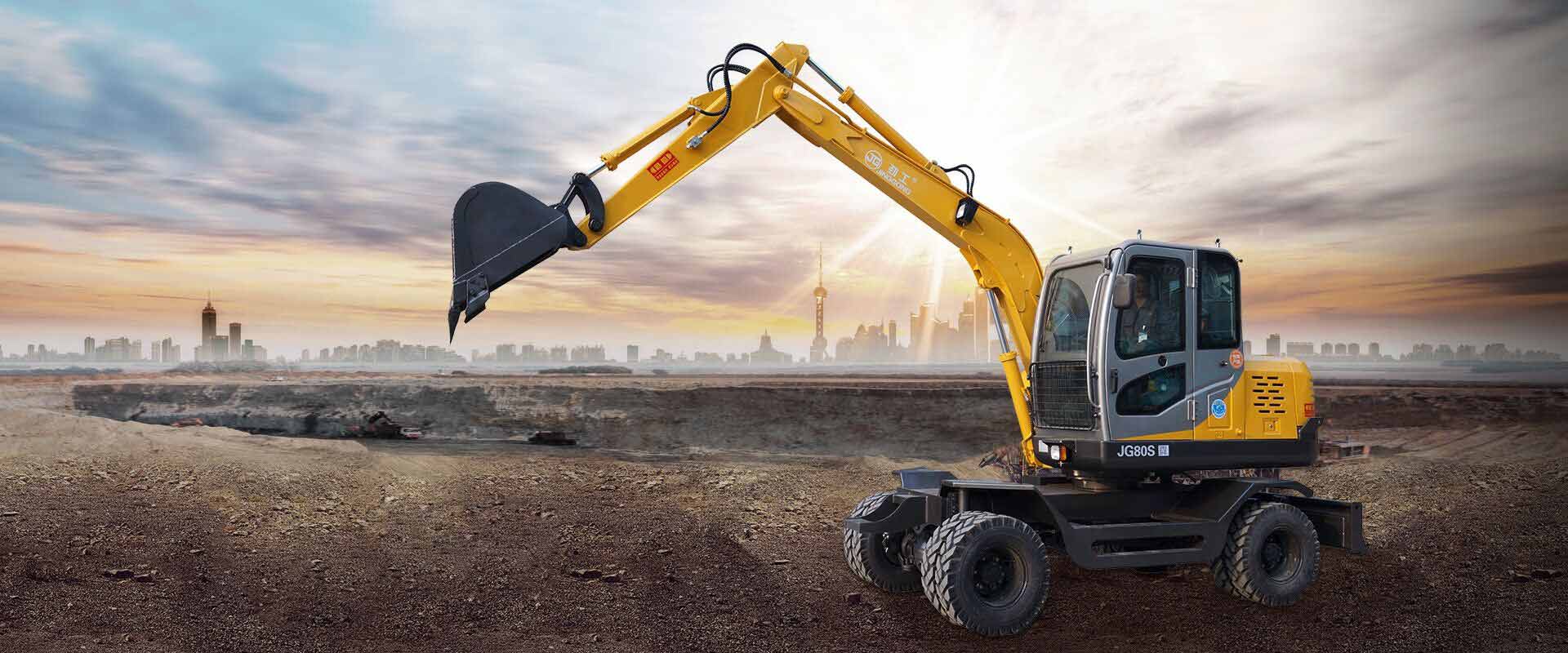
Un trio puissant : présente les 3 composants essentiels qui animent chaque excavatrice.
Imaginez une excavatrice comme un athlète mécanique puissant. Tout comme un champion a besoin d'un cœur vaillant, de membres agiles et d'un tronc stable, chaque excavatrice repose sur la coordination parfaite de trois systèmes fondamentaux : l'équipement de travail, la plateforme pivotante (superstructure) et le train d'atterrissage (dispositif de déplacement).
1. Équipement de travail : l'endroit où l'alimentation électrique est en contact avec la terre
Voici le « poste de pilotage » de la pelle hydraulique, avec ses bras et ses bras articulés visibles qui creusent, soulèvent, démolissent et nivellent. Son agilité et sa puissance déterminent directement la polyvalence et la productivité de la machine sur votre chantier. Ses éléments principaux sont la flèche, le bras et le timon (interface de connexion). La flèche est fixée à la superstructure et constitue le bras d'extension principal. Le bras, qui dépasse de la flèche, offre un meilleur contrôle de la profondeur et du positionnement. Enfin, le godet (ou le marteau, la pince, etc.) est fixé au bras pour réaliser une tâche spécifique.
Mais la structure d'origine ne suffit pas. De puissants vérins hydrauliques agissent comme des muscles. Le vérin du bras soulève l'ensemble du bras, le vérin de la biellette du bras tire le matériau vers la machine et le vérin du godet contrôle les mouvements de basculement et de déversement. La précision et la force de ces vérins hydrauliques, actionnés par le système hydraulique, déterminent l'efficacité de la pelle pour le déplacement de terre, le concassage de roches ou la mise en place de matériaux. Le choix de la configuration appropriée (longue distance, démolition, terrassement à grande échelle) dépend en grande partie de l'adéquation de cet engin à votre tâche principale.
2. Plateforme rotative (structure supérieure) : centre de commandement et de puissance
Imaginez un système combinant le cerveau et le cœur d'une pelle hydraulique, monté sur une base rotative. Il abrite les systèmes critiques qui assurent le fonctionnement et la réactivité de la machine. Le moteur, véritable centrale énergétique, transforme le carburant en énergie mécanique nécessaire au mouvement et à la pression hydraulique. Les pelles hydrauliques modernes sont souvent équipées de moteurs performants et économes en carburant, conformes aux normes d'émissions strictes telles que Tier 4 Final/Stage V, indispensables à la rentabilité et au respect des normes environnementales sur les marchés réglementés.
Le système hydraulique est un système de circulation. Le fluide hydraulique haute pression, pompé par la pompe principale, circule à travers un ensemble complexe de vannes et de flexibles pour actionner les vérins, les moteurs de rotation et les moteurs de déplacement. Son efficacité et sa fiabilité sont essentielles à un fonctionnement fluide et robuste. La cabine du conducteur est le centre névralgique de la machine. Les cabines modernes privilégient l'ergonomie, la visibilité et l'intégration avec des systèmes de contrôle complexes, notamment la télématique avancée pour la gestion de flotte et le suivi des performances – des fonctionnalités de plus en plus recherchées par les acheteurs internationaux. Point crucial, toute la superstructure repose sur la couronne de rotation, un roulement de grande taille permettant une rotation continue à 360 degrés. Ceci offre une mobilité inégalée, permettant aux équipements de travail d'atteindre quasiment n'importe quel point autour de la machine sans qu'il soit nécessaire de repositionner constamment les chenilles.
3. Train d'atterrissage (train de roulement) : la base de la stabilité et du mouvement
Cette plateforme robuste constitue le châssis de la pelle hydraulique, lui assurant une stabilité essentielle pour les travaux de levage et d'excavation de charges lourdes, tout en lui permettant de se déplacer sur le chantier. Pour la grande majorité des pelles hydrauliques, il s'agit d'un système de chenilles. Les principaux composants sont le châssis de chenilles, la chaîne de chenilles (anneaux et patins), le barbotin (qui entraîne la chenille), la roue libre (qui guide la chenille), le galet (qui supporte le poids le long du châssis de chenilles) et le moteur de marche/transmission finale (qui fournit la puissance nécessaire au déplacement).
La conception et la qualité du train d'atterrissage influent directement sur la stabilité de la machine en pente et sur terrain accidenté, la répartition de la pression au sol (qui minimise les dommages au sol), la capacité de franchissement et la durabilité générale, notamment en conditions abrasives. Les chenilles (standard, longues, extra-longues, larges) permettent de s'adapter à différentes conditions de terrain et exigences de stabilité. Moins fréquents sur les modèles de grande taille, les châssis à roues offrent des vitesses routières plus élevées pour les applications nécessitant une mobilité interurbaine fréquente, mais généralement au détriment de la stabilité et des capacités tout-terrain par rapport aux châssis à chenilles.
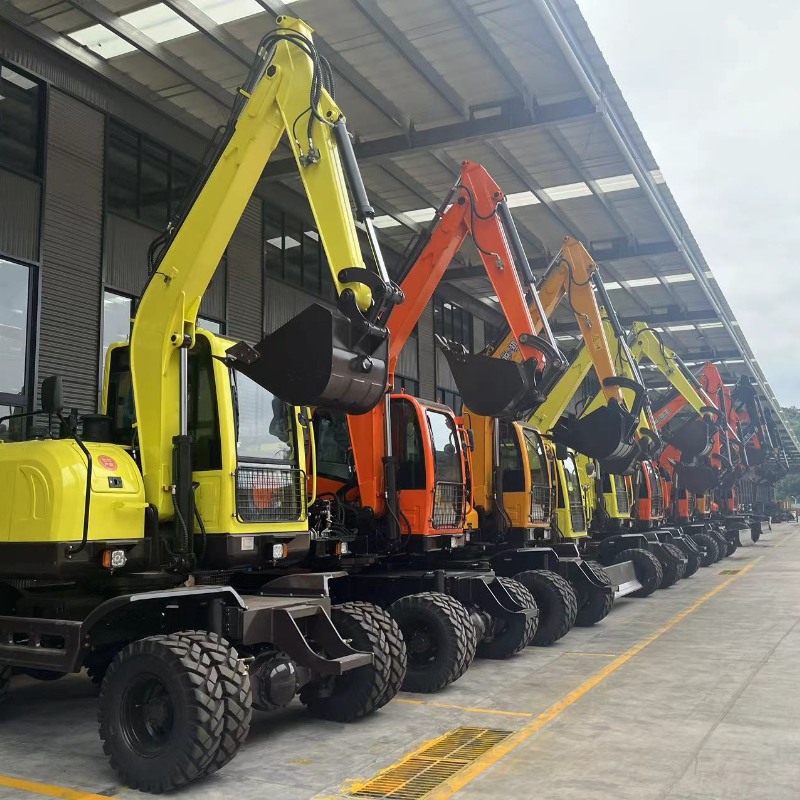
No. 88 Pancuo, Jiaonan Village, HeShi Town, Luojiang District, Quanzhou, Fujian, China
tel : +8618805957336
WhatsApp : +8618805957336
email : winny@fjjgjx.com
 réseau ipv6 pris en charge
 numériser vers wechat :

 tel : +8618805957336
 email : winny@fjjgjx.com


 plan du site